
Tabbi O’Connell is story supervisor for Tiger Aspect Productions. She spoke to Phoebe Lynch about how she got into the industry, how she interprets a script, and her own writing endeavours.
 We began by discussing her education and experience before landing her first industry job.
I always drew. My aunt was an artist. She had me drawing stuff when I was really young and I was absolutely obsessed. I’d watch cartoons and just sit there and just be completely obsessed with it. It’s all I wanted to do and there was never anything else. I went to school in Twickenham. I took art, music, the sciences, all that kind of stuff, and went onto Richmond College to do a foundation in Art and Design and got really into graphics, like really technical stuff – working with colour, a lot of life drawing. Life drawing is hugely important.
We delve deeper into the world of animation and the importance in experiencing different areas of expertise.
In the industry, you would have someone that does background, someone that does layout, you’ve got the storyboard artists. Actually, from the beginning, you’ve got your character designers and your background designers – they’re two different teams – and then you’ve got your storyboard artists and then you’ve got your layout artists, then you’ve got your animators and their assistants, and then you’ve got your effects animators and their assistants, and then you’ve got your CG world and lighters and riggers and maskers and all this. There’s so many levels of it, and I think why it’s a good foundation that everybody learns a bit of everything. Then they can go, ‘Oh yeah, I’m more technical minded, maybe I can do rigging!’ or, ‘I’m really into acting, I’m more expressive, maybe I’ll get to character animation!’ or, ‘I like bangs and whizzes and maybe I’ll do effects’. Everyone’s different, and it’s great that this industry has so many things. It’s a great time to be in the industry, there’s so much going on that, you know, whoever you are, you’ll find a place.
Which one of those did you really latch onto? Was it the character, rigging, etc.?
It was the character animation immediately, although I did do my time and I went through and did everything else. But when I got to character animation, I was like, ‘Yes!’
We get a little bit sidetracked with details of animation – sharing my own experience with working with a team of animators for the Collaboration Project – before returning to Tabbi’s pathway into the industry.
I went to Cumbria College of Art and Design, which is up in Carlisle. It’s as far away as you can get from London without going to Scotland. I needed to get away from London.
How did you get from art into animation?
Work experience – it’s really important. I wanted to make music videos and do this kind of funky editing stuff, but my tutor sent me to an animation company thinking that’s what I wanted to do, but at the time I didn’t. It was this place called Cel Animation in Frith Street in Soho. They did purely 2D animation, and back in the day, it was all hand-drawn on paper, and then you filmed it frame-by-frame with an actual camera with film in it, which then had to go off to the lab, so you didn’t know if it worked until it came back from the lab three days later. I went, ‘Oh my God, I love this’, and that was it.
So that was the tick moment where you found what you wanted to do?

Absolutely! I got a job painting cels at a company called Tomcat, and Tomcat then were closing down. I heard there was this new company called Passion Pictures starting up. They had been formed by the producers from Roger Rabbit and, though I was only 20/21, I phoned them every single day and said, ‘Have you got a job yet?’ until they said ‘Okay, come on then’. I remember that Wednesday. I left my job at Tomcat at six o’clock and ran across town to Passion Pictures, who were just off Regent’s Street at the time. I started and I didn’t leave the studio for three days. It was full on. We were just drawing and doing this McDonald’s commercial, but it was like the best thing ever. And then they offered me a full-time job because I was so keen. Passion Pictures are huge in the industry. Now they do everything, but I can say I worked on their first job ever. I was lucky to stay there for five years. I learned from the best. They had loads of Disney animators that came out from America. They had even Chuck Jones come over and do a commercial. We were just like kids – starstruck.
I suppose it’s showing passion and the integrity to work hard that kept you there, and you got that permanent job afterwards.
Oh, I was a pain in the arse, I literally was. I was young. I probably wouldn’t do that now, but I think I might have annoyed someone on reception so much that they just went ‘Oh, all right, for God’s sake, I’ll get you through to somebody’.
If that’s something you wouldn’t do now, what would you recommend?
There is a lot to be said for consistency and keeping in touch with the producers or directors that you know, or heads of departments that you know. I’ve got maybe five or six that, when I’m coming to the end of a job, maybe two months before, I’ll maybe say, ‘Hey, how are you doing? I’ve just come to the end of a project’, and they know they can pick on you. It’s key to stay in the front of their mind as opposed to the back.
So just when the end of a project comes along, put a little feeler out.
Exactly.
And how did all of this lead to you getting your current position as a story supervisor?
I didn’t want to do it. I wanted to board, but they really needed a supervisor and they said, ‘We know you can do it’ because I was assistant director on a show called Mama K Team 4 – or actually it’s now called Supa Team 4 – that came out last year on Netflix, and the director on that said, ‘I know you can do this, and I want you to do this because I’ve worked with you before and I know you’. So I didn’t put myself forward for it, but it was the next natural progression for me, having boarded for such a long time.
We talk about how important it is to surround yourself with the right people – people who can push you out of your comfort zone and give you confidence and support whilst doing that.
There are a few gems of people out there like that. Once you find them, hold on to them. Then you do a good job. You want to make sure that their suggestions and recommendations are justified in you, and so it does keep you working and pulling out that extra mile for them personally because they’ve believed in you in the first place.
Although it wasn’t what you wanted to do originally, are you enjoying being a story supervisor?
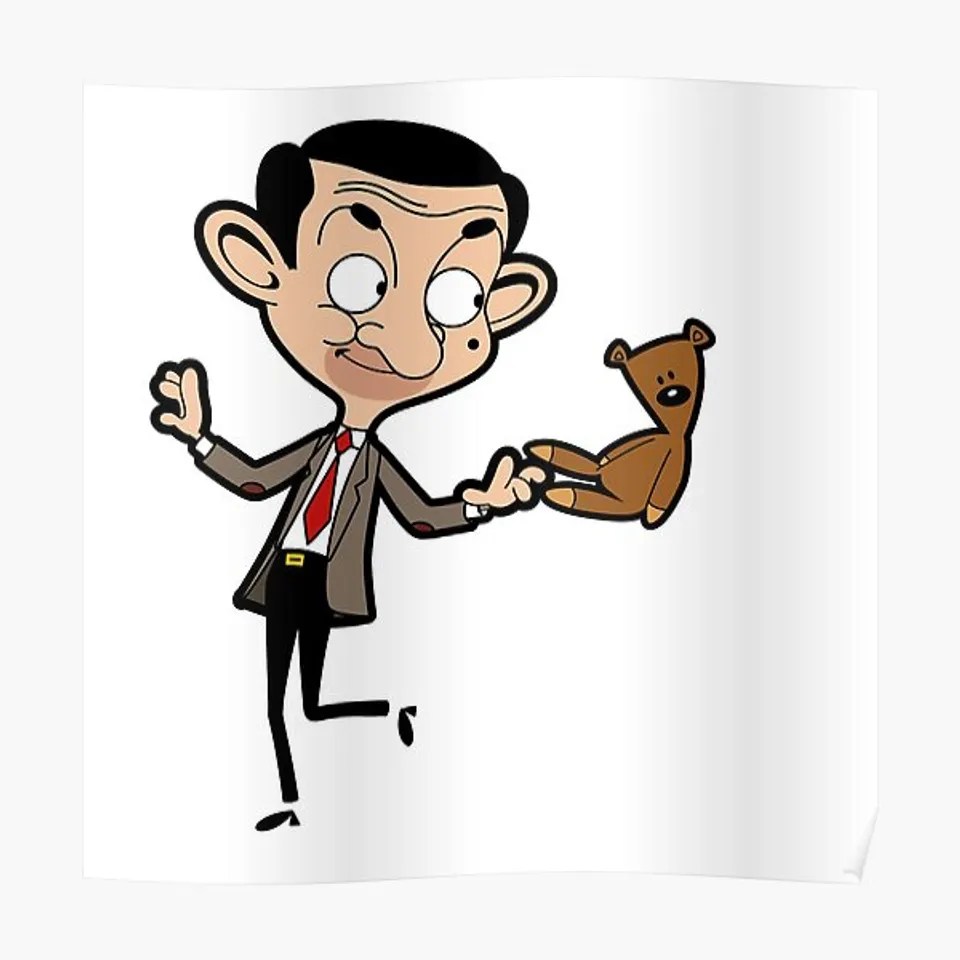 I love it! It’s a cross between being an ideas person and keeping a group of people together, keeping them on budget, keeping them on schedule, keeping them flowing creatively, and watching that. Every time I get a pass in – we get rough passes twice and then we get the clean passes – every time we get a pass in, and I have to give notes and feedback on it, it’s brilliant because you see what’s on the script page coming to life successfully and it’s always great. We’re on Mr Bean at the moment. We’re lucky we have a really strong crew, so my job’s easy.
Can you sum up your role in one sentence?
A story supervisor’s role is to help shape the director’s vision of the show with a team of board artists. Personally, I start by breaking down the script, which involves finding the key emotive beats, comic timing, and pace of the overall show, then briefing the artist on how they should approach the board in a way that doesn’t take away the creative flow and input, but works within a set of rules regarding acting, canvas, timing, etc.
How you go about finding those emotive beats and comic timing, etc., in a script?
What happens quite often in the script is that we get too much comedy in too soon. Because this is a comic show, if we start peaking too soon, then what have we got to look forward to? Even though it’s just for kids, adults will watch it with their kids. So putting in a little comic beats and set-ups for later on is key. Easter eggs – they like that a lot. Things that have been in other episodes where kids can go ‘Oh, where’s that come from?’ Not too much of it, but really building something so they’re hooked in and they want to know what happens next. Keep them guessing.
Some scripts are overly descriptive and just spell everything out. So sometimes we send scripts back if the timing feels off. It’s a ten minute episode, it should be ten pages. No more. I mean, sometimes the scripts can be… I call it ‘fluffy’. There’s just too much filler. You just think, ‘That can be said in one word’ because if the boarders then beat-by-beat draw everything out, suddenly you’ve got a sixteen minute episode on your hands and then the editorial department have got to edit it down to ten minutes and we don’t want them working until 2am.
Time of day is also really important – making sure that the progression of time is understandable. It sometimes involves adding beats in that aren’t in the script that show how we’ve got from one place to another, transitions and things like that.
Are these transitions in the script originally? Or do you send scripts back with the transitions as a note?
Every writer is different. Some of them put them in and really explain what they think should happen. They’re usually the more experienced ones who have really studied the show before. Other people are kind of ambiguous about it just say ‘transition’ and that’s it. So then you have to think about what that panel will look like before we transition to the next one. And then also we could do transitions in editorial as well. I can go back to the director and have a conversation with him and say, ‘Can we do this in a creative way? Can we link up something happening in the shot? Does it matter? Is anyone going to care about that?’ That’s more in feature films, but a lot of directors are really insistent that you link things up to help the story flow. It can be quite clever with things like that. So it’s always on our mind about how you transition time-wise between scenes and shots.
I’d love to come back on what you mentioned about Easter eggs. If a new writer comes onto a show, are they expected to add callbacks to previous episodes or would you come back to them and go, ‘Oh, this would be nice if you could include that’?
We would probably add it later on if there’s nothing and if we see a place where we think, ‘Oh, that’s a prop that we used from season two, but it was really fun and we could use it here. Let’s put it in and see if anyone remembers it. It’s already been designed so we’ve already got it’. Things like that. We hope that the writers who come onto the show know the show. When we start, we’re told to watch as much as we can and make sure that we’re staying on the same page as we go forward with it so it doesn’t come out wildly different. I think even though I’m sort of experienced in it now, I do realise how some of the storyboard artists, when they’re new, struggle. It is very script specific what we’re doing at the moment, so Rowan Atkinson’s really involved with it all. He has a lot of really cool ideas and it’s his show and we would never veer off from that.
And then other directors will come in and say, especially if they’ve written it as well, ‘Go crazy’. You, as a director, just want to see what you want, what you come up with. Which means I’ve got this script in front of me and now it’s all going to be changed. Then we’re going to get on set and change it all anyway. So, yeah, it’s a collaborative process and it changes and warps all the time. They might even stop production and go, ‘Right, we’re going back into rewrites’. That happens a lot. Not on series work like this, but when it comes to features. Everyone’s put on hiatus and then you come back a month later and start again.
Is it usually a full script rewrite or just certain scenes?
Normally just certain scenes. And I think as they [writers, directors, and storyboard artists] go through and as they board, they kind of work hand-in-hand. You see what’s working, what’s not, or the board has come up with ideas that the directors then want to write into the scripts. So you get various colours of scripts as part of the feature going through, and then you have to sort of go back and re-board it. Those first sort of three or four months are very collaborative between director, storyboard artist, and script writer, where they’ll just iron everything out – especially if they’re doing an expensive shoot. They have to get it right from the get go.
How does that process differ for smaller scripts, like those for a series?
We expect the scripts to be ready to just go. I mean, I just got a script yesterday. Normally I’d like to have a week in between getting a script and briefing somebody else, but I just got a script that I’ve got to brief on Monday.
Gosh, that’s only four days!
Yeah, it’s a fast turnaround. If there’s anything in the script that’s not working and we have to send it back – which we don’t often have to, sometimes just a few lines – there’s a very small margin for being able to do that.
We’ve briefly touched on this, but please could you elaborate on the features of a good script which make it easier for you to do your job?
You can tell if something’s going to flow well and you can tell if it’s going to be overwritten. You want it to be something with minimal wording without trying to suggest cameras or direction. Unless it’s a shooting script, of course, which is very different. My bugbear is writers not checking for continuity. That’s annoying. Suddenly someone’s got to hold something in their hand and we haven’t set that up from the beginning. It should flow really easily, should read easily, and you should just really enjoy it and be engrossed in it. It should be fun and easy to visualise without any guesswork as well. Sometimes key beats are left really open, and then that’s going to get caught in revision, so in that case, we might send it back. I think that’s it, really.
We’ve spoken about not adding too much comedy straight away, but what elements work for you to build that comedy in a script?
I think making sure that characters are believable from the onset and that they’re strong and they indicate that they interact properly with the lead character without taking anything away from him, especially in [Mr Bean]. Even things like set and location are really important so it doesn’t become impossible by having too many locations. Sometimes the most successful shows, the funniest and the most charming, are the ones that are just set in Mr Bean’s house, but it’s just him, you know. You might bounce off Mrs Wicket, who’s his landlady, and so you’ve got that nice juxtaposition of the two characters and their relationship which is actually really funny. So sometimes they’re the most charming. Trying to write too much stuff into it, unless it really is key to the story, is not necessary. It’s the whole less is more theory, I suppose. And giving the characters time to breathe and be themselves without trying to do too much.
As you also have experience directing, I wondered whether you look at a script differently depending on what role you have. For example, what’s the most important thing that you look for as a director opposed to a story supervisor?
I would really try and visualise things. I’m a visual person, so I try to look at what the environment and the mood of something is in a visual form, first of all. I even think in colours and relationships between people, setting up the mood, clear character profiles, and the rhythm. For me, it’s like a song and a dance. I’m really into independent cinema, so like a lot of black and white, moody cinema and just something really beautiful. It makes me really think visually about how something is working on the page. I would see it visually before I would think about what people are saying.
When it comes to dialogue, I see a lot of writers setting things up for the actors. But you have to trust the actors – or the voice recording artists – later on down the line because they’re experts at what they do and they bring so much to a script. So when you think you’ve got everything perfect on the page, they will see something else in it, and they will bring their character to it, and it will change again. Never be too precious with a script because you need to leave room for somebody to then go, ‘Oh, I really like where this character is going and I’m going to make him do this’, or ‘He’s going to become that’, etc.
Giving someone room to develop it as well, rather than spelling out every single little detail. I think that when you’re describing someone in their environment, pick out certain things of the room that will give you indications about who they are – a photograph, the colour of their carpet, things like that. They might have one light on, they might have bright lights on, the kind of pet they’ve got, all that sort of stuff. It’s the little details – visual clues as to who they are, without spelling it out too much in the beginning. That’s more of a kind of film type thing, but even in Mr Bean, we don’t give everything away in the beginning. There’ll be a build-up to things. And he thinks a lot. That’s one, two, three, maybe even four panels, and then, ‘Aha!’. Maybe that’s even five. It might be just a very quick, ‘He thinks’ thought process, but it’s also very telling for characterisation. And it can take a while.
I studied Witness from a storyboarding perspective, but I got the script and I pored over it for days, and days, and days, because it was a really good example of how the visuals and the dialogue and the characters all work together. It was really strong. I know it’s a bit old-fashioned now, but actually it’s about timing your beats out, and just taking time to tell a story. You don’t have to just shove everything at the screen, which is obviously what’s happening these days a lot, especially in remakes of action films. We need new original content. Certainly for the past year, in terms of cinema, I think there have been some really brilliant original or adapted screenplays.
We discuss films we’d seen recently – particularly All of Us Strangers and Wicked Little Letters – before I ask which is Tabbi’s favourite project from her career to date.
So, I have two. One was The Ren & Stimpy Show. I was an animator at the time and it was kind of like my Nirvana, you know. All of us, we were just crazy like being a kid in a sweet shop. And the director got us all together and told us basically to forget about animation – ‘This is comedy’, and that had to be our primary focus above anything else. That was a fun one. But more recently, I got asked to do the opening credits for the new Disney Snow White feature that’s coming up. The director, Marc Webb, was totally open to ideas. He was brilliant. And it was a really loose brief and I got to design, board and block animate the whole thing. I put some really way out stuff in there. Whether he’ll use it or not, I don’t know, but he was really encouraging, really open to it. I’ve worked on a few things for Disney now, Maleficent 2 and Aladdin. Things like that are always fun because they have money and time. You get weekly meetings and then you’re just pinging ideas backwards and forwards. You just feel like you can breathe. So that’s fun. And the current project, obviously brilliant.
That sounds incredible, having the freedom to do what you want.
I think all roads have led to that. People had confidence in me, so they put me forward for it in the first place. To have the confidence to stand in front of loads of men and go, ‘This is what we’re doing’, and then saying it in a way that people go, ‘Yeah, we trust you, let’s do it’… It’s important to just really recognise where you are and what you’re doing, being part of these amazing teams and go, ‘I’m here, and I deserve to be here’. As women, we particularly struggle with that.
When we met, you mentioned you were in the middle of writing your own screenplay. How is that coming along?
I write when I get time. I think it’s twenty years in the making in my head. I was told by a writer that writing is seventy percent thought, thirty percent doing, and so I’ve been starting to write every day for the last six months or so. I’m learning a lot. It might not get made, but it’s one of those things where everyone’s got a film in them, right? So I think that I’ll just put it out to the universe to see what happens, but it’s the process of doing something for yourself that’s really important. When I first started the industry, that was the point of it. People start studios because they want to make their own films, and I wanted to get into film because I wanted to make my own film. I never did, and it’s about time that I did it. I’ve sent it to a few producers to get their feedback. It’s a live action/animation combo, but it’s quite dark – it’s not cartoony by any stretch of the imagination. And I’ve got some good feedback from a couple of producers, so I’m going to forge ahead. I think it’s really important when you work on your own stuff to have people you trust to get feedback because they’ll then say to you, ‘Oh, maybe you could try that’ or, ‘Oh, show me again in a month’ – someone who’s going to feedback to you regularly, and will actually give you honest feedback as well. It’s not showing a friend or partner or whatever and they go, ‘Oh, that’s wonderful. That’s great’, and you’re like, ‘No, I need to know what works’.
How has your experience in the industry helped you with writing this one?
It’s not going to be fluffy at all. It’s very character driven. It’s very visual. As I’m not a professional writer, I find it easier to visualise scenes in that way. It’s where the animation part came from – it originally was going to be entirely live action, but then I realised there were certain things that were quite dark. We can show them in animation because it’s acceptable. I wouldn’t necessarily show it in live action. I wouldn’t necessarily have someone saying these things.
Clearly this is a future project for you, but is there anything else you would like to see or do in your future?
I’d like to direct, actually. I’ve done a few little things, but nothing bigger with actors. I’d like to learn how to direct actors properly – I’d like to work with humans a bit more. Maybe I’d be first assistant on my film, if I got to do that.
As part of this magazine, we’re also interested in where you see this industry going in the future. Do you have any predictions? Hopes? Fears?
I’d like to see the industry invest more in independent filmmaking, and be less about the remakes – even though I’ve worked on quite a few and they do pay the rent. So they have been good in that respect. Warner Brothers have remade a few classics, like Tom and Jerry. All this stuff has been brilliant for me – who doesn’t like drawing Tom and Jerry?! Just another highlight.
I think this focus on independent cinema is really interesting.
I think it’s really important. These things go in cycles, right? I’m hoping that people will go back to the old way of making cinema where it was just a really beautiful art form. Anyone can think of a film, like a Star Wars-type universe with X, Y, or Z acting in it. I’m sure that would come up in an hour in an AI program. I’m not really worried [about AI], but I know people that are really worried. I think it will never replace the team spirit in the creation of something that artists have spent years at film school honing their skills to make, or being present in a particular moment in time with the director in a room where you’re pinging ideas off each other. You can’t take that away from anyone. All the directors I work with – they work with Disney, Warner Brothers, Paramount, Sony, Tiger Aspect – their favourite part of the job is sitting with a creative team and knocking something out. You’ll never lose that, because people need people, and we need independent thinkers around to bounce ideas off each other.
Our interview gets a cute interruption in the form of Basil, Tabbi’s dachshund, who was the reason we ended up meeting in the first place. We get sidetracked with doggy antics until we come back to the subject of AI.
I think [AI] is nice if somebody hasn’t got any money and they’re desperate to be a filmmaker. I don’t know where people have come from. If they’re a writer, but they can’t get anyone to make their film and they’re desperate for people to see their ideas, it could work. Everyone should have access to film at whatever level, however much money you’ve got. There’s a lot of levels in the film industry, so if it’s someone who’s not come from that privileged background, they should have access to whatever they want. If it’s a tool to help somebody get their ideas out there so they can then move forward, I’m all for it. And I think that’s a generational thing. Personally, I’d rather sit in a room with five other people that are as crazy as me.
We reach the end of the interview and I thank Tabbi for her time. We wish each other luck for all our future projects.
It’s a really exciting time for you. When I was doing it, it was a hard industry to break into. Now, there’s so much content. Everybody needs good writers.


 ScreenWorks
Leave a comment