Scott Alexander is a freelance game writer and former journalist. He spoke to Sacha Thomas about breaking into the industry, the different aspects of storytelling in video games, and his vision of the future of the stories in gaming.
So Scott, how did you first start writing for video games?
I started as a video game journalist. I was covering video games for a number of publications. I was at Ziff Davis for a while, I was at Popular Science Magazine here in the US, and I was at Playboy magazine. And Playboy is where I really started covering games heavily and through that process, I got to know the PR people first who made games then they introduced me to the actual developers and some of the business people behind these things, and I was just so fascinated to kind of pick their brains and get to know them. I’ve been fascinated with games since I was a little kid and there was a new crop of games that came out in the 90s that really made me sit up and take notice of like, oh, there’s something really interesting going on in this medium, like storytelling wise.
The game that really did it for me, this game called Abe’s Odyssey, which where it was getting some buzz. I was like, Oh, I haven’t played a video game in a long time. I played it, and was like, Oh, my God, this story is so rich. It’s a completely different way to kind of communicate, no, not just like, of all, it was super elevated from like, I’m not just like, running around trying to, like, execute physical feats of dexterity. Like, actually a story happening. And if you were telling the story in a book, it wouldn’t be as good, this was a new medium and the don’t come along very often. Like the written word, it’s pretty old. But, you know, the video, television, we have five or six [storytelling mediums] in human history, and a new one was born. Now in the 70s, maybe in the 80s, I was playing a lot of storytelling games in the 80s, but in the 90s, it was like, I was like, the fidelity of the storytelling possibilities really started to come through.
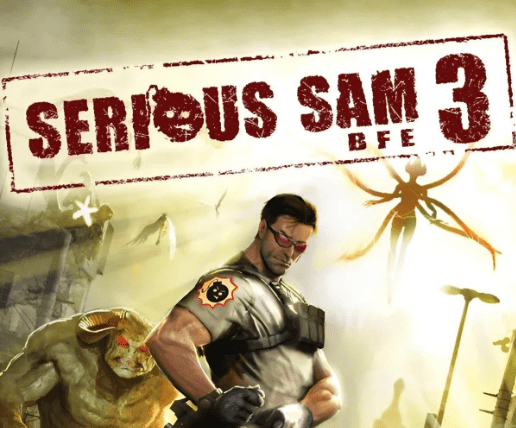
So I started kind of trying to move towards that in my journalism and I really just was like, whole hog, trying to get to know these guys and figure out fascinated by it. And so I had been covering games in that capacity for about 10 years, and I got to know one developer publisher pretty well, and they brought me in to do a and they were like, do you think you could ever script for a game? So I did, and that was Serious Sam 3, in 2011, one of the first games published by Devolver Digital. And they had guys who’d done the first two Serious Sam games, and they had an idea of what the story would be, but they had no idea how to write it, and they weren’t native English speakers, so I went over there and got to sit with them and go through the whole game and then write a story around it, which was how I started [writing for games].
You said that video games were a new medium for storytelling. Is that because this medium involves active interaction? Could you go into more detail about how this new medium differs from those previous ones?
Storytelling in games is both narrative and environmental. I just write scripts, which actually limits me in my ability to be a video game storyteller, because so much of the storytelling happens in the environment, right? So much of it is you’re walking around inside this thing, or you’re manipulating whatever things inside, and you’re experiencing the environment in a way that almost feels somaticized. And visual component of it is as important, if not more important, than the words, right? And so to really be a storyteller in games, you kind of want to be in charge of both those things. And the games that I really love the ones where the person at the top of it has that creative vision like BioShock where aesthetics of the environment so important to understand the story right? And then the script writing is also really important, and the writing of text on the vending machines is really important.
How has active interaction changed storytelling? It depends on the type of interaction, that could be really different from game to game, right? So like in an RPG where you’re building a character in a certain direction, you could be playing completely different game, essentially from two different people playing the same game. Could have a completely different experience playing Mass Effect or something like that, where one person’s gonna go be a total sleaze bag and one guy’s gonna be a paragon, and you’re going to literally play a different game. You’re going to hear different dialog, you’re going to and so that, once you start branching that way, becomes unbelievably complex, really, really quickly.
And so then you start to see, okay, in a game like Walking Dead, they did an amazing job making it feel like there’s this branching set of possibilities. You’re making all these choices. But if you really look at it, if you look at the diagram of it, it’s basically giving you choices that are actually false. Whatever choice you make you’re always going to end up here. And yeah, maybe you go through this door or this door or this door, but all three of those doors lead here, which makes it feel like making these choices that matter. And maybe there’s a little bit of a dialog change here or there, but, like, it’s just not tenable to make a truly branching I’m making this choice, and that’s going to matter, right?
The ones that come closest are, like the open world games, where there’s sort of persistence, like something like Breath of the Wild, where you have, you know, it’s the ultimate branching story, but it’s a whole bunch of systems that are essentially on autopilot. So they’ve built a world that’s full of systems that that you interact with, and then there’s story layered on top of that. So that creates this unbelievable feeling of interaction. But almost all the interaction is in the systems of the world, not in the story, right? And so it’s really hard to have interactive story. And maybe we’ll get there with AI but it’s very hard to put the interactivity into actual story, just because it gets really complex really fast.
You mentioned games giving you false choices, where no matter what decision you make you’re going to end up in the same place. How do you personally feel about those kinds of options?
I think that it really depends on the game you’re making. Like, if you’re making a game that is supposed to have meaningful choice in it, it should be meaningful choice. If you’re making a game that want the player to think is meaningful choice, and it’s not meaningful choice, you can do it and you might even pull it off, but it’s sort of like, why? Like, I’d rather not sort of like fool a player. If you do your writing correctly, the ending will still be surprising to them.
But then you have writers like David Cage [Heavy Rain, Beyond: Two Souls, Detroit: Become Human] I love his games. I loved Detroit. I thought Detroit was incredible, and it is entirely based around branching and that’s kind of the only thing that game does is branch. It doesn’t have complex gameplay. To do a successful branching narrative, it blocks out the ability to do much else. It sort of takes the whole stage.
So there’s a balancing act between narrative interaction and environmental interaction?
Given the fact that you have a certain amount of time to make the game, you have a certain amount of people to make the game, you have a certain amount of money to make the game, and you’re trying to make money at the end of the day. You’re trying to get a product out that people will buy. So if you index more on story, you’re going to index less on interactivity, probably, or you’re going to index less on gameplay.
You mentioned that AI could potentially bridge the gap between interactive gameplay and an interactive narrative. Could you go into more detail about what you mean?
If we get to the point where AI can tell satisfying stories, and we are not there and we may never get there. I’m not convinced that we will, I see no evidence that makes me think we will definitely to a place where AI will tell stories. But if you posit a world where AI can tell satisfying stories, that is maybe the only way you could have a situation, where you’re playing a game and I’m playing the same game, and we get utterly different games. I went this direction and you went that direction, and it made up different stuff for me over here than it made up for you over there, that you could have something that has millions or billions of different things or different possible stories within it. That is a really interesting thing. But it’s not practical for humans to make.
The closest we’ve come is games like Fallout or Skyrim. They feel infinite. Once you play them long enough, you start to see the seams. The biggest tell-tale thing is dialogue repeating. If you play a game for 100 hours, you’re going to see repeated dialogue because there’s only so many things you can have a guard in a city say.
Those games are miraculous. They create the illusion of infinity. So I consider those games miraculous. They’re amazing feats of storytelling, and this distributed storytelling, where we will, you and I playing those games, we’ll probably have a completely different game, just because we’ll see different parts of the world. If we both played it for 120 hours and we completed it, we’d end up seeing all the same stuff, but still in a totally different order, which is still totally cool. It would be like, if, if we read the same book and read it in different chapter orders, and somehow it made sense both of us. This is a new medium. This is a new way to digest and understand story that’s sort of nonlinear, and contains potential for 100 different methods of storytelling, so that’s just very inspiring.
So you can we talk more about your roles? You’ve been credited as a story designer, a writer, an additional writer, even on some projects you’ve been given special thanks. Could you tell me more about like, what those roles exactly entail?
So Additional Writing: I’ve worked on games where all I did was translate, kind of poorly formed English into well-formed English. Like where the developer has the whole story and all the story beats but each individual line isn’t ringing true because they’re not a native English speaker. So that one is essentially localization.
On Superhot I came into a completed game. It was in alpha, all the levels were designed. But the story wasn’t fully formed. So I worked with them. We had a whole period before I even started writing, I was just defining what was actually happening: What is the world? Who is the player? What are they really up against? And that game doesn’t have any spoken dialogue. It has words, sort of in the world, and then it has text on screen that is like mimicking chats. And so the writing in that one was like writing the interface, like, what does it say on this interface? When you hit this menu, what does it say on that menu? And we had terminals which gives you little easter eggs and there was one terminal which could give you like 1 of 20 different messages. So that was like, you know, that’s utterly different than screenwriting and book writing and sort of narrative nonfiction. It’s fiction, but it’s sort of world building. So that’s what I would call story design. So script writing is really just writing dialogue as opposed to story design where you’re really saying “they should go here” and “they should go there”, you’re conceptualizing what the environments are going to be, that the player is going to be moving around in.
So you’re building the path for them?
Right.
What does a Special Thanks credit mean?
Special thanks is always just going to be probably you did something nice for someone. Maybe you did something that wasn’t paid and so you’re given special thanks. Sometimes it’s a conversation, you had, some advice you gave, or your somehow you influenced someone’s mindset in a way that they were like “wow, without that, this would have been different”.
What’s your favourite project you’ve worked on?
Shadow Warrior (2013) [in which Scott was a writer and story designer]. There was a game called Shadow Warrior that came out in the 90s but it’s like, super racist, and messed up. And so when this project came up, we went back and looked at the old game and it was like, “oh, like, why are we trying to reboot this”? And we went back and really were like, “okay, we’ve got to make sure people know we are making a clean break from this, and we are being extremely respectful of these other cultures that we’re talking about”. And so we wrote a really serious story. We made him a wisecracking guy who’s kind of okay in the ass, but we also grounded it in the way the other characters reacted to him: he was not someone to be looked up to. And that’s just one of the reasons we gave him the sidekick Hoji, who is constantly tearing him down. We have this macho guy running around being like “yeah, I’m the best. I’m so cool”, and we’ve got this guy in his shoulder being like “you are such a douchebag”.
It’s essentially a buddy cop relationship: they don’t get along; and then they end up having a deep, meaningful friendship; and then there’s a sacrifice. So it felt like we were able to start a place that was macho and testosterone fuelled and but landed in a very grounded, emotionally true friendship. And I was just really happy with how that came out and the character Hoji, people really, really responded to him. As the story unfolds the audience finds out he has this real trauma. It’s a game whose story is about family trauma. We snuck family trauma story into a testosterone fuelled shooter. So that made me happy.
Duke Nukem Forever (2011) came out and missed the memo on this. They were like, “yeah, we’re rebooting Duke. Duke doesn’t give a shit, and he runs around and he says inappropriate things, yeah”. My view of the original Duke was that it was a parody of actually assholes, right? But then Duke Nukem Forever came out and they were you’re celebrating this guy who is awful. Which was really tiresome.
So that’s your favourite project, which project did you learn the most on?

A combination of Shadow Warrior 1 and 2, because on those I actually got to direct the voiceover also, and that was and then on Shadow Warrior Two, I got to be part of the mocap session. When I wrote Serious Sam 3 and it was recorded later, the line reading was all wrong and there was the wrong emphasis on lines of dialogue. So being able to direct the voice acting was a massive sort of step up. And like getting to see how sort of long and involved that is, and how intense that is, and the talent of these performers. We worked with some amazing voice actors.
And with Shadow Warrior 2 we started from a total blank slate, and were able to take the characters we had and change the world. In Shadow Warrior 2, the world has changed immensely because the events of Shadow Warrior 1. So we were able to kind of expand that and play with ideas for a couple months before we even started writing. And then getting the chance to go over to Warsaw and work with the team in person for a couple weeks, and to see how all these completely different things work together: the mocap artists; the programmers behind it; all the people who are doing the weapon interactions; how the actual mechanics work; people who are designing levels.
Could you talk more about the blank slate you were working from at the beginning of Shadow Warrior 2?
Our main blank slate point was, we had sort of not quite painted ourselves into a corner, where we ended Shadow Warrior 1 on this big climax. And then we had to ask ourselves: “well, what would happen then?” In Shadow Warrior 1, the hero starts in the real world and then goes into this demon world so we posited what if the actions of Shadow Warrior 1 caused the demon world to crash into the real word. So then, so now the two worlds are kind of like merged and sort of bursting through each other. And then it’s the post apocalypse, basically.
So we went back to the developers with this idea that it’s a demon infested wasteland, and it’s a kind of post-apocalyptic and they were like: “awesome”. That’s one of the great things in games, it’s so fun, you can do whatever you want. Like, if you were pitching that as a movie, you’d hear the developers say “that’s going to be really expensive”. But in a video game it costs the same to make the pixels look like the real world as it does to make the pixels look like a demon. It actually doesn’t blow your budget to do something ambitious that way, which is kind of cool.
So you guys pitched your idea for Shadow Warrior 2 and the developers loved it. That seems like a case where collaboration has worked out really well, where everyone was on the same page. Have you been in a situation where all the collaborators weren’t on the same page? And if so, how did you deal with that?
There hasn’t really been much where I’m not in the same page, because it’s pretty clear up front what my role is so and most of the time my role is: “we have done this, we need you to do exactly this, and none of the rest can change”. So it’s most of the time, it’s working within parameters of something that already exists, like “you have to start here and you have to end there. What you do in the middle is whatever you want.” And so that was a process of, like, coming up with ideas and then going to the developers they’d be like “most of that will work but this thing is not going to work” and then I’ll go back and change it. I come in as a freelancer most of the time and so my position is not one of throwing my weight around. If there’s something I want to fight for I’ll try, but I know that it’s more like putting up my hand and saying “this could be really cool.” Most of the time people are willing to hear your idea but if they say they can’t do it, it’s not really a discussion.
Is there anything you’d liked to add about the differences between writing for video games in comparison to writing for film or TV.
I’ve written a bunch of screenplays. I haven’t had anything produced yet, but like, the more I’ve learned about it, the more it’s a really a wonderful medium to work in. There’s an immense creativity in writing a screenplay but there are constraints. It’s very much one thing, there’s one form that a screenplay kind of takes. And with games anything goes. It’s closer to books, where you can mess around and there’s a lot more experimental books that are successful in comparison to experimental movies. And almost every game is an experiment and the bigger the swing, the better.
Do you think of acts when you’re writing the story of a video game?
Scott: Not as much. Acts mimic ancient storytelling shape that is inherently satisfying to people. So it’s not a bad idea to think in those ways of like: let’s have a character; have them in their kind of original world, see their old life; have something happen to them that takes them out of their normal life; have a set of problems for them to solve; make them think they’ve solved all their problems; but they really haven’t; have things come to a really big crisis; and then solve it. That’s how you tell a satisfying story. But if you’re doing something like Skyrim, you don’t know what order they’re going to do everything in, so a linear narrative doesn’t work in that format.
What are your top 3 favourite video games of all time?
The Legend of Zelda: Breath of the Wild, BioShock, and Psychonaughts.
What are your top 3 favourite films of all time?
Brazil, The Iron Giant, and Harold and Maude



 ScreenWorks
Leave a comment