Lee Gant has written scripts for some of the most-watched shows in television – and now he’s moving into shorts and features. He tells Benjamin Sutherland how to create characters from real people
Lee Gant describes himself on his own website as an “extremely pragmatic writer.”
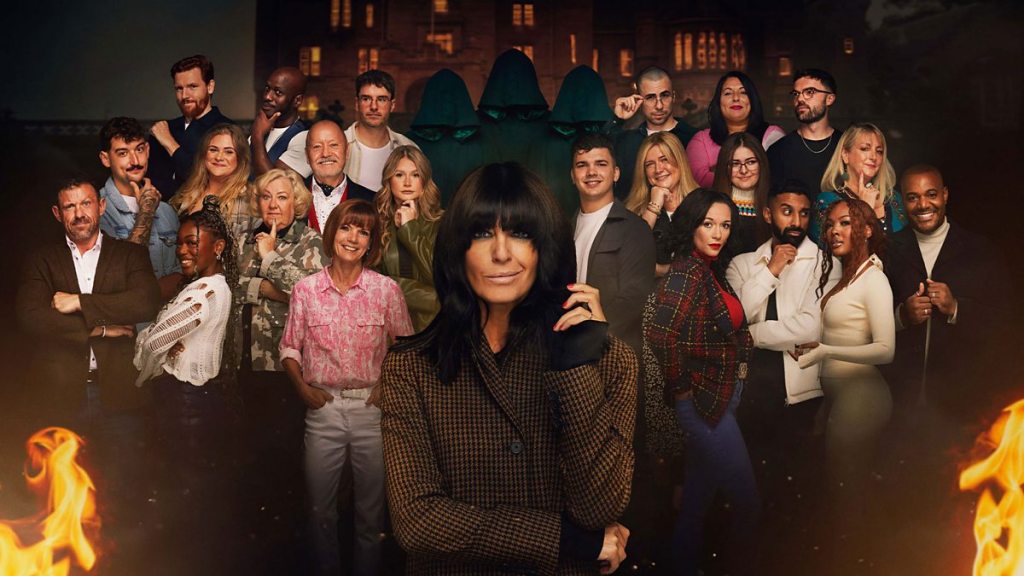
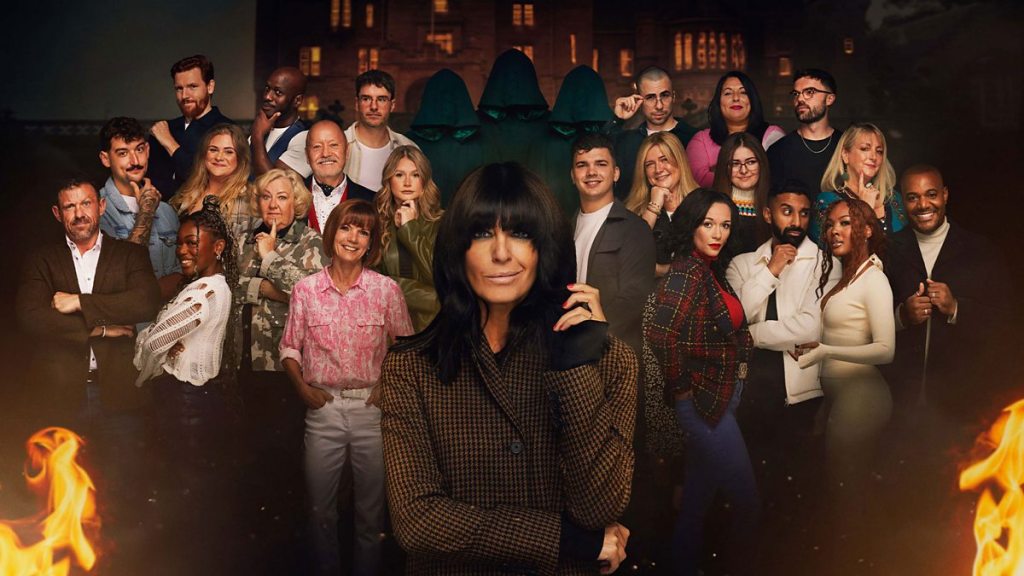
It is an apt description. As a writer on The Traitors, The Circle and The Weakest Link, he has fashioned a career on some of television’s most talked-about programmes.
But as a nascent screenwriter with three shorts under his belt, he is only just starting out. And it is the way he is using skills learned from the reality TV medium and transferring them to his film work – both shorts and feature-length – that makes him such an interesting subject.
“I’m from a background in production – the classic runner-researcher-assistant producer-producer, and I was getting a lot of work in that area – but I always wanted to be a writer,” he says.
“But to make the leap from producer to writer is pretty tough, because there’s fewer writer roles around.
“A show like The Traitors has got 200-odd people and one writer. There’s probably 20 producers and 30 researchers. So it’s a really hard thing to get into. But I thought – I’ve been doing it for so long, I need to make the leap.”
Screenwriting in the classic sense focuses on crafting a story for the audience that deploys a narrative arc – the establishment of a status quo; an inciting incident; an act one turning point; an emotional midpoint; a moment where all is lost; a satisfying climax.
But reality TV can – and does – do the same. Drama does not deal in real people, it deals in characters – and reality TV is no different.
The process of turning the hours and hours of footage of real people doing real things into drama of characters defined by action depends on writers every bit as much as an Oscar-winning film or a streaming series.
And the better that is done, the more involved an audience is. The final episode of the second series of The Traitors – written by Gant – was one of the TV events of 2024; it was watched by a peak audience of seven million people, a huge number in the fragmented, modern British market.
“A show like that, you have to really throw yourself into,” Gant says.
“It’s a great format – I’d watched the Dutch version a few times – and there was a bit of a buzz about it, but not to the extent that it hit when it first came out.
“When [Series One] came out the phone was ringing off the hook.
“For Series Two everyone was going in with eyes wide open to how big it was. I made the most of this time in terms of staying after I’d finished my day to watch the Round Table – I’d get in early to get the gossip.”
Reality shows like The Circle test a writer’s ability to explain things quickly, without fluff – while still being entertaining.
“It’s all well and good to look at the scene and say, ‘oh, the guy’s in the bath with a rubber duck, let’s do ten rubber jokes’ but what the producers want is a reminder that earlier, Ben had an argument with Lee because Lee thought he was siding up with Stacey. Now Lee’s about to have a conversation with Ben to address that.
“You have to write in an entertaining way but loaded with information.”
This is the critical bit, where Gant is concerned. “It’s not a stand-up show. People aren’t watching it for the writing all the time. If you get the odd gag in there, great. You do give them a lot of gags, but you know that out of every ten, two might make it in.”
The storytelling voice on something like The Traitors or The Circle might be a major network TV presenter – but they are still working with a crafted script, and someone has to write that.
And learning how to get inside the head of Claudia Winkleman or Michelle Buteau has been critical for Gant’s writing of fictional characters too.
“It seems glamorous writing for these comedy names and household names, but really, it’s just another house style – in the same way you would have a certain tone for a certain actor,” he explains.
“I tend to write for a lot of women, so I’m always thinking, ‘would this person say that?’”
Gant recently completed his first feature-length film script, which features a woman as the central character – a Victorian shark hunter.
“It’s not necessarily that it’s a women’s story – it’s, ‘is there a reason this character can’t be a woman?’” he says.
“More often than not, why not make it a woman? It’s more fascinating to write a lot of the time. And you’re not stuck down in that thing of, ‘am I just writing me? Is this just me writing a blokey thing?’”
The ability to put himself in the shoes of someone very different applies equally to Gant’s latest short, Ticket – which stars Jordan Myrie (Sherwood) as a traffic warden – and civil war survivor – from DR Congo, who is given a hard time by a salaried professional in London, played by Daniel de Bourg (Bridgerton).
“I was very aware of being a white male, so I did a lot of research and I kept it quite vague,” Gant explains about Myrie’s character’s background.
“We didn’t name specific places – I just made it so if anyone challenged me, I could say, ‘this is from an official UN report of these atrocities happening in this village in the DRC’. I wasn’t just going to be saying he was from Scary Africa.”
Ticket draws inspiration from an incident Gant saw in real life at a garage in Crouch End, when an angry middle-aged white man was berating an implacable – and short-statured – parking attendant from west Africa.
“This guy’s screaming at him, ‘do you know who I am’ – and this little garage guy was not phased at all,” he recalls. “He thought he was being intimidating, but it probably wasn’t in the 1,000 most intimidating things that had happened to him.”
Gant sent the script to friend Marcus P Liversedge, who really wanted to make it – though it would need extensive rewrites given the budget would not allow for filming in the real Democratic Republic of Congo. The resulting short is to be entered into festivals in autumn 2024.
“I’m really pleased with it actually – it’s a total drama, but there’s massive flashes of really dark, horrible comedy in it,” Gant says.
“Apparently that’s my calling card.”
A look at Gant’s other shorts – No Man’s Land (given the Special Jury Award for Artistic Achievement at the Baltimore Comedy Festival) and The Bellboy – demonstrates the truth of this “calling card”.
Both are wry comedies featuring central characters who are disappointed in what life has dealt them.
“That’s basically my entire oeuvre of written stuff – disappointment, bleakness – but it’s just funny,” he says.
“Why is it so funny – people having breakdowns or people being really gutted about stuff?” Gant asks.
His work taps into what is perhaps a particularly British sense of quiet despair – the same seen in works like Clockwise, Steptoe and Son, or the comedy Gant finds most inspirational, Rising Damp.
Rising Damp’s Rigsby “is such a tragic figure – in the same way as David Brent, but with so much more venom,” Gant says.
“And it’s socially conscious as well, but without being bleating about it.”
In a rather meta way, those comedies have taught Gant not only about writing funny content, but given him lessons about approaching writing too.
“I’m not philosophical at all, but it’s just funny because it makes you realise everyone’s like that – even Larry David, a multi-squillionaire, is constantly disappointed,” he says.
He adds that “cynicism is just funny. Life kicks the shit out of you a little bit and you learn not to take it so seriously.
This approach especially helps in what many writers find is incredibly difficult – the task of managing your inferiority complex in comparison to other creatives.
“You’ve got to accept that some people are going to be better than you – always,” he says.
“That’s just the way of the world.”
But whatever the quality of the script, it is useless until someone else has seen it.
How Gant went from TV production into reality scripting and then onto the first steps of film scripting was not an especially mysterious process.
Those first writing gigs were on a format made huge on television in the 1980s and which is now a staple of YouTube and TikTok – the hidden camera show.
Gant shone because his production background had given him a firm grounding of what might be possible for these programmes to do within their – often miniscule – budgets.
“People would send in ideas: ‘A horse walks down Oxford Street’; ‘We’re at a rave.’ I would know those were not going to work,” he says.
“But I knew what the budget was, so I ended up writing a lot of the stuff that got onto the shows.”
The key launchpad was an ITV programme called Off Their Rockers – a format based on a Belgian show called Benidorm Bastards – in which senior citizens play pranks on unsuspecting members of the public. It ran for four seasons, from 2012 to 2016.
“I said to the producer, ‘I’m writing so many of the sketches, and I’ve always wanted to be a writer – so let me be a writer’,” he explains.
“They said they would give me a half day trial as a writer or 16 weeks as an assistant producer. I was like; ‘I’ve got to go for the trial’.”
In short, he gambled – and was successful, ultimately becoming the series writer.
And those early shows – where there was minimal context, and very little time for the voiceover – helped hone his ability to get a script down to its bare essentials; to cut to the heart of a joke, or a scene.
“I get excited when I make a page into two sentences,” he says.
“To me that’s brilliant – when you’re deleting, snipping words out. That’s the craft.”
Gant also learned the essence of cutting to the chase from doing sketch shows on stage. There is nothing like a gag failing to land to really show where an edit can be made.
“If you can make stuff shorter, it’s always better,” Gant says.
“That translates to features and everything.”
And he says that he learned from Curb Your Enthusiasm – where Larry David mines deeply uncomfortable comedy from often rather contrived situations – that audiences are very willing to accept a degree of suspension of disbelief that new writers simply do not realise they can get away with.
“Don’t agonise loads and loads about the audience watching saying, ‘this doesn’t make sense’, he suggests.
“If you can just get through something and go to the next scene, do it. People aren’t as bothered as you are about what you think your plot holes are.”
In other words, coming to terms with the fact that that the script has to go out at some point is tough – but essential.
Worrying too much about the quality – and endlessly re-editing and revisiting the same script – can go from being a help to an anchor on a writer’s success.
Instead, Gant’s advice for new writers getting started is about being in perpetual motion, both in terms of scripting and getting the work out there.
“The first thing you make isn’t as good as you think it is,” Gant says.
“It’s not going to be Citizen Kane – you think it is, because you’re desperate to get this story out of you – but it’s not going to be your most personal thing and it’s not going to be the most important thing anyone’s ever said.
“It might do well, might not – doesn’t matter. Just move on to your next one. You’ve got to learn to keep going.”
But writing the work itself is only half the process. Alongside a good script, “more networking, more cage-rattling; more cold calling” is essential to making it.
“A lot of people in the industry are guilty of saying, ‘I hate all those things’ – but that’s like saying, ‘I’m 40 now, I can never be bothered to go into town’,” he explains.
“Go to networking events and stuff. I try and cultivate relationships. I send people I work with scripts all the time.”
And his key piece of advice to new writers is simple: always be working on something, because that gives you something to talk about.
“If you go for a meeting with someone who wants to give you a job, and they say, ‘what are you up to at the minute’ and you say, ‘oh nothing, I’m not working,’ then that’s it,” he says.
“But if I say – like I do now – ‘I’ve just got a short about to finish in the edit, I’m writing a thing at the moment, I’m developing a sitcom and here’s the deck” it shows you’re a writer.”
When it comes to what makes a writer, the clue really is in the name.
“It’s not just your job – you live and breathe it,” Gant says.
“If people know that you’re passionate about it, it doesn’t mean you’ll get a job over someone who’s better than you, but it helps – it means they know you’re going to work hard, and be committed.”
Even if it’s just an unpaid short film (“I mean no-one has ever made a short film to make money. Ever”), having fresh ideas and getting new projects going is so important because “it’s very bleak for a lot of people.”
Gant explains that continuing to write becomes a virtuous circle – not only does it give the writer something to talk to a prospective producer about, but it helps them maintain their positive mental health too.
It can, after all, be a lonely occupation. Sitting quietly at a computer getting words down when there is an exciting world going on – not to mention all the distractions of the internet right there on the same device the script is being written on – is a sacrifice, and there is no guarantee the work will receive anything at all in terms even of feedback – let alone a commission.
But Gant urges that new writers “stay positive and don’t lose the passion for it.”
“There’s a lot of very cynical writers. And if you want to make loads of money there’s a lot of other industries you can pick.”



 ScreenWorks
Leave a comment