
Robyn Williams
We recently had a conversation with the multi-talented Norman Busigu, discussing his insights on documentary filmmaking, offering advice for emerging creatives, and exploring the challenges faced by creatives of colour in today’s industry.
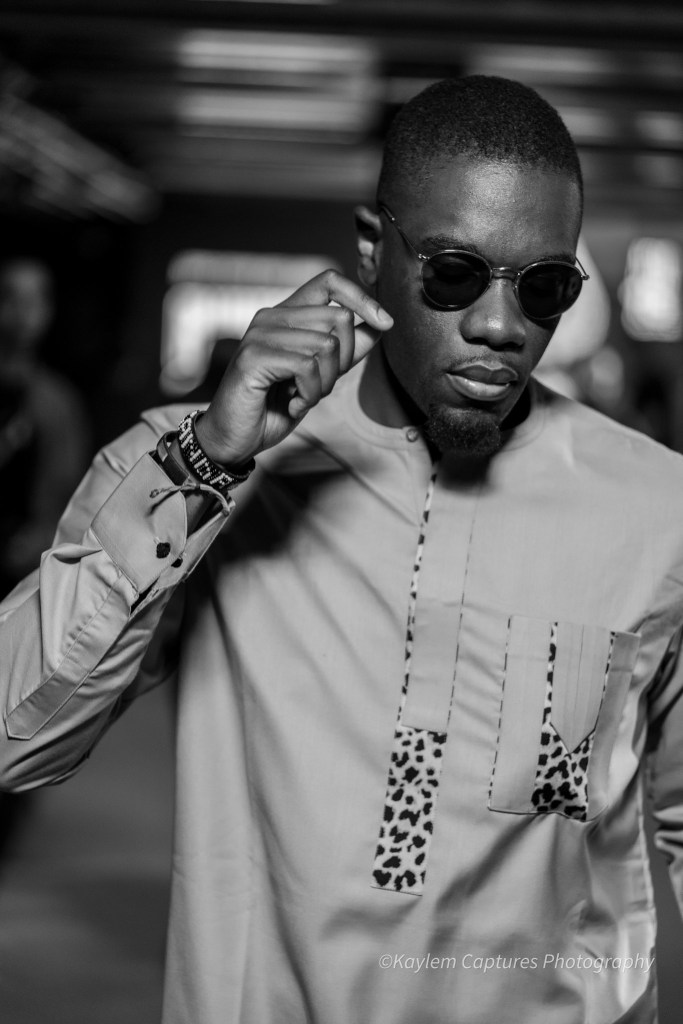
An award-winning British Ugandan filmmaker, broadcaster and fashion model, Norman’s career has already attracted international recognition. In 2022, he was nominated for Excellence in Journalism by the Global African Awards, and the following year, GQ South Africa hailed him as “Africa’s Modern Storyteller.” In 2025, he was also
recognised by Rolling Stone Africa as a “vanguard shaping global African cinema” and Yahoo! Finance as an “Acclaimed African Documentarian”. A member of Forbes BLK, he made history as BEN Television’s first international news correspondent with his own weekly slot, and has hosted high-profile events, including at the UK Houses of Parliament. His modelling portfolio spans an ELLE feature during London Fashion Week 2020, fronting Soho House’s skincare campaign and walking for Gert-Johan Coetzee. Norman’s filmmaking credits include three docu-films spotlighting Africa and the diaspora, from Ghana’s tourism boom to Nigeria’s youth-led future, to an upcoming exploration of Jamaica’s deep ties to Africa.
During our conversation, Norman spoke about the realities of filmmaking beyond the UK, particularly in Africa, and how emerging filmmakers can make the process more seamless. In all his docu-films, he works closely with local communities, ensuring that his projects give something back to the places where he shoots. For Norman, this means paying collaborators fairly, from tour guides to camera crews, and valuing their insights into the filming environment. Building that trust, he explained, can open doors to deeper cultural access and unexpected opportunities to connect with people and groups who might otherwise be difficult to reach. Safety and cultural sensitivity are central to his approach, as he notes, “You can’t just go and film; local dynamics and even military presence matter.”
This ethos partly explains Norman’s deep interest in Africa as a focus for his docu-films. He sees the continent’s growing global and cultural influence, from its rising economic prospects to the worldwide popularity of Afrobeats. As a member of the African diaspora and a first-generation British Ugandan, he is also driven by a desire to challenge what he sees as an image problem in Western media, where narratives too often focus on issues such as embezzlement and poverty rather than Africa’s diversity, innovation and cultural richness.
When asked whether ethnic filmmakers have a responsibility to tell stories about their heritage or report on cultural moments, Norman described it as a nuanced question — especially when it comes to whether Black creatives “owe” certain narratives to their communities. While he acknowledges there is pressure to represent issues accurately, he believes the more important consideration is whether a filmmaker is the right person to tell a particular story. “The wrong person saying the wrong thing can be more harmful in how communities are seen,” he explains. To illustrate his point, he draws a comparison with music: rappers are not expected to produce only conscious tracks. Artists like Akala or Mos Def create socially engaged work, but no one demands that Future comment on political issues.
Norman also points to the ongoing ethnicity gap in the creative industries, from underrepresentation in prestigious press opportunities, recalling being one of the only black people on media panels at prominent events, to structural issues such as a lack of infrastructure and funding in the UK creative sector. The challenges have been magnified by the post-COVID economic climate, where questions arise over whether society should prioritise funding health or the arts. This widening gap, he stresses, affects not just ethnic talent but creative talent across the board.
For emerging filmmakers navigating this environment, Norman’s advice is clear: the hard work starts after the film is made. Publicity, outreach and follow-up are just as important as the creative process. He urges filmmakers to think about marketability from the outset and to be honest about their motivations. If it is purely for notoriety or clout, completing the project will be much harder. Passion, he says, is what carries a filmmaker through to the finish line. His own career is proof that unconventional paths can lead to success: While having experience in the corporate world with childhood dreams of becoming the next 50 Cent or Bow Wow, he simultaneously grew to discover a deep passion for storytelling.
He encourages new talent to think boldly and creatively when seeking opportunities, recalling how his docu-films led him to, among other things, gain the support of the Ghanaian High Commission UK, Deborah Ababio (the previous Global Entertainment Director for Vogue), and an upcoming collaboration with British Airways. Above all, he says, trust the process; every step can lead to the next.
Looking ahead, Norman is excited by the possibility of branching into fiction and producing for film or television, with a particular interest in world-building. While he acknowledges this shift will require time, money and resources, he hopes to explore drama or hybrid forms sometime soon.



 ScreenWorks
Leave a comment