By Alice Han-Thomas
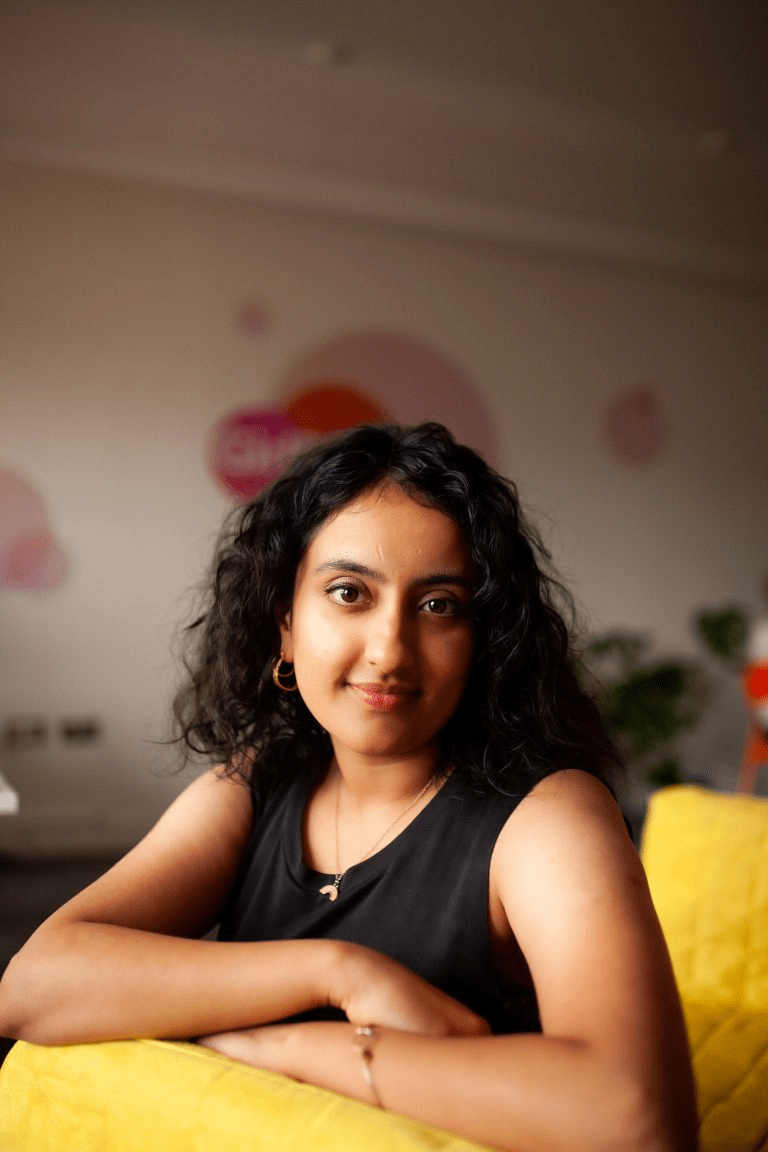
In July, I had the pleasure of speaking to Producer, Writer, Curator and Marketer Daljinder Johal, who gave me great insight into the film industry. I asked her a few questions regarding her own journey with producing and how she operates, as well as asking for advice on how an upcoming filmmaker can get her foot through the door.
Q – How did producing in film come about for you?
I grew up in a very matriarchal family, it was always, why wouldn’t I do that? All the men are doing it. If it interests me, why would I not pursue it? In terms of careers, I transferred from being a journalist to producing. I started in live events but felt the creative factor was lacking for me. I went into theatre and found more creative fulfilment there. And then through the pandemic, and through mentoring, I fell into film producing.
Q – You wrote the BBC audio “Until it happens to you (2022)”, a profound piece on menopause using diverse perspectives as a way of exploring the subject matter. What was it that made you want to do an audio on this, and why the three distinct voices in the audio?
Being in an environment that allows for questions helps this. It can be very common in black and brown families to get forgotten, because you’re so busy working. The immigrant experience is very focused on success, achieving, and looking after each other so things just get lost.
I remember one day my mum spoke about how she was nearing her menopause, and we began speaking about it. It made me think, why don’t I know much about this? It’s not something that is spoken about much, so it was general noisiness. I wanted diverse perspectives, so someone from an ethnic minority background, in this case South Asian background to be specific, someone experiencing early menopause (due to cancer), and a trans person who is experiencing the menopause (they identify as a man but are still experiencing it). It took a lot of respect and care to work with the contributors.
Q – When you’re the producer, how can someone come up to you and go “this is my idea”? Is it word of mouth for you, is it an email from an agent, or without an agent? How do you work, what is your process like, and how does an idea get produced by you?
Broadly, I would say I’m open to any approach. One of my writer/directors Suga Suppiah (Ratthum, 2023), I met through a Facebook group, where she was applying for a BFI fund and was looking for a producer. We got chatting, even though I wasn’t meant to be producing anything. We clicked, and we had our first chat. She felt I could see the emotional part of the story. But I usually ask for emails.
Riffy Ahmed, who was on the panel at the Bipoc Queer Screening event last April, said “Producers are polyamorous, and directors are somewhat monogamous.” The problem is, as a producer, you do have a lot of people warning you to talk to you. You want to give everyone the time. So even if it’s someone I know, I would say look, we can have a chat about it as friends but if you formally want me to look at this you need to email me.
“Producers are polyamorous, and directors are somewhat monogamous.”
From theatre I learnt to produce with care and quality, and being aware of different styles of communication. Things don’t go in my brain, unless it’s written. So, an email with a clear pitch, it doesn’t have to be a super professional treatment, but a general written thing of this is who I am, this is what I want to do, and this is why I’m talking to you.
Word of warning, always be careful of wanting to email people. Sometimes it’s better to do less than to do more. Broadly, as a producer, it doesn’t matter about ego, but you have to understand who you’re talking to, which means doing your research on people.
Q – I remember you mentioning on the panel at the Bipoc Queer Screening event, how you chose to work with a director who’d only directed theatre before. I’ve done a few shorts myself, if I’m pitching to a producer, they’re going to be looking at my track record. Is it a thing where they feel I won’t have done enough or can they take that risk, similarly to how you did with that director?
I think it’s interesting because I’ve had this conversation with an editor, who asked me why I’d said yes to this director who’d only done theatre. I thought, this is why you’re not a producer, you don’t have the same skillset. Story, and creative teams have several different ways of manifesting. As a producer you must see potential, you’re the one having to go with someone who has something to say, but hasn’t had the right opportunity, and chose to champion that.
This director (previously only worked in theatre) understood blocking, working with actors, tone, how to create an atmosphere and how to get that feeling you want to give and audiences. So, some of the technical stuff, sure it was going to be hard, but between me and the DOP, you just have to hold each other. You go, this is what I struggle with, but this is what I’m good at, and you support each other.
“As a producer you have to see potential, you’re the one who sees someone who has something to say, but hasn’t had the right opportunity, and you choose to champion that.”
Q – What are some tips you could share when applying to BFI funding?
To be clear, this is about the BFI networks fund, they have two funds, the early development fund if looking to do features, and they have the short film fund too. I’ve been funded about 5 times. I would say that understanding the scope is important.
It is hard as writer/ director to budget, you do need an idea of how much that financially means for you. My other problem is when I’m approached, people have very ambitious ideas. You can have a few ambitious things, but for example within 25k, you might have multiple locations, but everything else is quite simple, with a small cast. Or a small intimate location, few cast but then you go crazy with production design etc. You can see it with successful BFI shorts. Or shorts that are around the same budget. They sell a very simple idea, but there is that one big wow factor.
I’m a BFI script reader now, you read the applications for some of these funds, and you think, you’re not going to do that in 25k. For example, they might need to work with child actors, and they haven’t said how they’re going to work with child working hours etc. When doing something challenging you just need to show an understanding of how you’re going to mitigate that and why you’re the person that’s going to tell that story and to tell it well. And get to know your creative team before you apply, because you need to get on with each other.
“They sell a very simple idea, but there is that one big wow factor.”
Q – We met at the Bipoc Queer screening, where my short film Milkarma (2024) was screened next to Ratthum (2023). I’m unsure on what the next steps for my short film should be. I’ve submitted to film festivals, but I feel stuck on what to do next. What would you suggest?
What are you trying to get out of film festivals? You might be going into the film festivals to make more professional contacts. Is it to look for an agent? More production funding? Filmmakers aren’t celebrities until they get to features but you might want to build a bit of a following or an audience for your films. Especially if you’re acting, I’ve got a few friends who are actor filmmakers and they can fill a room, like easily.
When it comes to deciding what to do with your films when it comes to distribution, it’s about what you want to achieve. Fairview Park (2024) is a good example of that. We wanted to do festivals so more people could know the story. We felt the story needed to go as far as possible. It being on channel 4 is such a huge win for us, as it’s on a mainstream broadcast and it’s easily accessible.
“Filmmakers aren’t celebrities until they get to features but you might want to build a bit of a following or an audience for your films.”
I would say for you, if you’re looking for an agent, you should be looking at starting those conversations. Even before doing a wider release, I would suggest emailing a few agents you’re interested in, saying you’ve done this short. And have something clear to invite them to – so you might do your own screening, but I would say only do that if you have a very good relationship with somewhere to do it very cheaply, and if you have the cash to burn, because broadly, a lot of those agents might not turn up.
You could email the agent and their assistant, as the assistant might come. If that’s your kind of route, think about how you’re going to build a relationship with these key people. If it’s available online, you can send it with a private link. You want to give them that opportunity to interact with you as an individual. If you’re looking at building more audience, an online release could be more useful. There are a lot of different avenues, so it’s about really distilling down, who you think watches your film, and what groups do they belong to? Where do they live? What age bracket are they?
If you can get any other smaller London, like thinking about art galleries, to some of like more art house short film nights, that are in London, maybe one off. Just so your film is screening in London before an online release. For example, with our screening of Ratthum (2023), we screened it at one place, and someone said, “Oh I’ve seen your film at this place, can I take your film here” and so forth.
“There are a lot of different avenues, so it’s about really distilling down, who you think watches your film, and what groups do they belong to? Where do they live? What age bracket are they?”
Also, you kind of just want to make friends at this stage. I still have all my theatre mates, and we’ll talk about what’s going on in the theatre. You basically do the same in film. You want to attend short film nights to see your mates and connect with new people and become friends with people. You find your people. Filmmaking is a long and tiring process. Don’t get me wrong, you are competing sometimes, but at the end of day, sure there are so many funds and opportunities, but if you really treat it like that, it’s a very lonely process. We can either be mad about competing or we can all be friends.
You’ll have so many different problems, at least you can be there for each other. You can also give each other feedback on things and help each other. You need to have those relationships. I think the short night films/screenings in London will help you to build that community which is useful. Having mentors has also saved me a lot of money and time. Being able to ask someone questions that aren’t googable.
At the end of the day, filmmaking is a business, so you want to build a community as well.
—
Thank you for reading and if you want to see more of what Daljinder Johal is creating, see the links down below.
Alice Han-Thomas.
REFERENCES
Stay up to date with Daljinder Johal
https://linktr.ee/daljinderjohal
Watch Ratthum (blood) Produced by Daljinder Johal
https://www.minuteshorts.co.uk/film_player/ratthum-blood
Watch Fairview Park co-produced by Daljinder Johal
https://www.channel4.com/programmes/fairview-park
Listen to Until it Happens to you by Daljinder Johal
https://www.bbc.co.uk/programmes/p0cr8kcq
Interview conducted by Alice Han-Thomas.

 ScreenWorks
Leave a comment