
by Bella Parsons
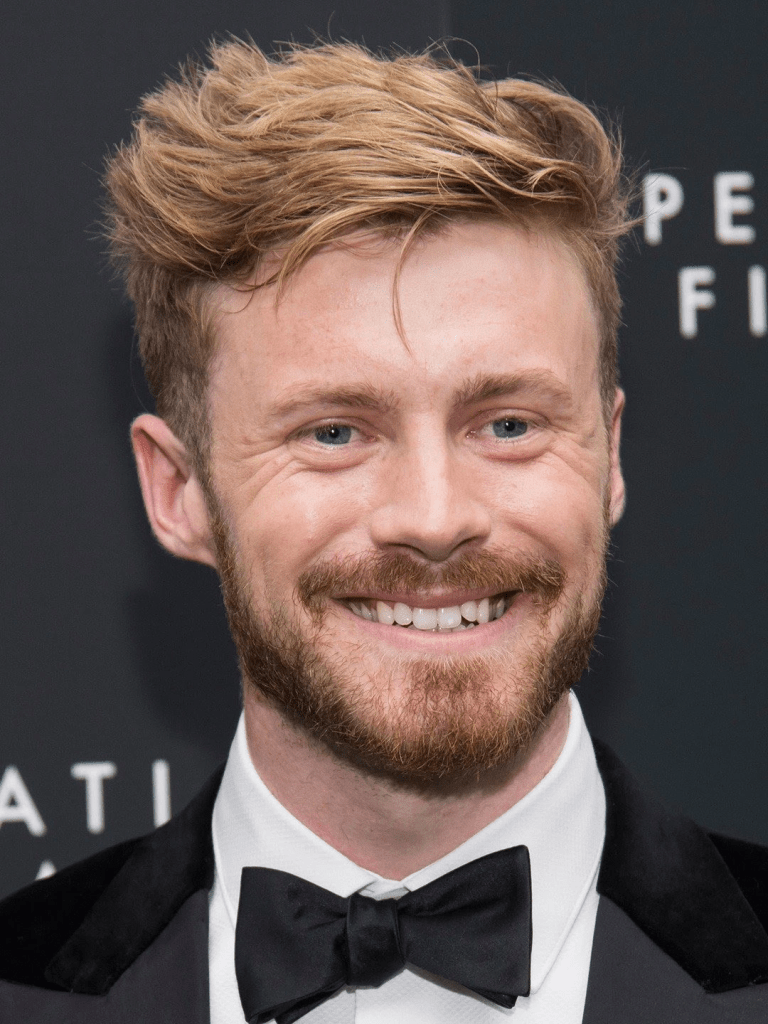
How did your degree in history inform your approach to storytelling?
I found that my degree helped me in two quite distinct ways. The first was it equipped me with the skills of a researcher that I found incredibly helpful for building worlds. I think that one of the reasons I chose not to do an English literature degree, interestingly, is because I wanted to gather those skills of constructing my own stories rather than taking apart other people’s. So having a degree in history ended up being extremely helpful for knowing where to look to unpick what a time, a place, a person might have been like.
The second thing is it was filled with really inspiring stories. I wrote my thesis on whether or not the metaphor of the closet was appropriate for describing queer urban life in 1920’s Britain. It wasn’t. But that thesis was really, really important for encouraging me to think about characters and stories and themes in a very different way. It opened my mind up to how the world might have been different, or how people might have looked at the world differently back then.
How did you get interest in your very first script?
Very fortunately, around the time I decided I was going to make a run of being a writer Game of Thrones had just started. And so, suddenly, very ambitious pilot scripts were appealing. I had a friend who had managed to get a job at The Independent’s mailroom. And I gave her the script, I think initially for her feedback. But she got it onto the desk of an agent at The Independent and I went in to meet him and talk to him about the script. He very sweetly set up meetings at other agencies, and I ended up meeting my now agent as one of those people.
I think the broader lesson that’s contained in there is assessing market trends, looking at kind of the shows that have sold recently and why, and trying to make a loose prediction about where that might go. I don’t think it’s right to ever write for the market, but writing for what you think a future market might be.
I’ve written the first movie that I’m hoping to direct and it is a period thriller, which is a crazy thing to write as your first movie, but it’s very small and hopefully cheapish. My thinking is that in the next couple of years we are going to be looking for ways to do big movies on a sensible scale – whether that’s sci-fi, period or fantasy. Looking at those ways of narrowing the scope of something while still giving the feel of it being large, I think is going to be really important. So, I’ve written a couple of things with that kind of mindset.
What other trends have you seen that you think are becoming more popular?
I think that horror as a genre still works really well, especially intelligent horror. And unique approaches to storytelling – for example if you look at something like Weapons, a kind of multi-strand or interwoven narrative.
And then real-world tie-ins, I think are going to be more important. For example, F1 is a really good example of a film that has done very well and has a real connection to the real world. So, I think highly specific fictional stories that are directly tied to the world we’re in now.
How did Operation Finale get picked up?
I had gotten onto a program which sadly no longer runs – the “Guiding Light” scheme. It allowed the writers who were selected to propose a list of five other writers, and they would endeavour to get one of those five to be your mentor. I picked a guy called Matt Charman, because he had just got a movie called Bridge of Spies made by Steven Spielberg. He was very new to the scene and just had this big success, and I wanted to know what it was like to have that success and how he got there. So, I asked him to be my mentor, and he said yes, and he introduced me to his manager – he’s still my manager – a guy called Jeff Silver. Jeff loved Operation Finale, and took it out to the market and managed to get MGM to buy it. So again, very specific, but the kernel that is useful there is that when you have a big international idea, it’s helpful to have a big international team to try and sell it.
What was the research process like for Operation Finale?
Well, fortunately other people have tried to tell the story before. There are three other movies that have tried to do it. So, looking at those movies and figuring out what I would want to do differently.
I read an awful lot of history. In particular, there was a really good revisionist history of Eichmann as a man that tried to challenge Hannah Arendt’s old banality of evil notion. I saw that as a really interesting way of trying to tell this story – trying to humanize, if that is the correct word, a demonic figure like Eichmann, who’s so easy to caricature. I also managed to speak to some of the descendants of the kidnappers, which was cool. I went out to Israel and did some interviews.
Then I got loads of feedback. I think I probably had around 15 friends and family read it, so it was a very iterative process to get it to the point where it went out and got sold. I try to still do that – to share my work widely. It’s by being iterative that I think you sharpen anything that you have, whether it’s a script or movie or whatever else, into the sharpest version of what it can be, and that’s really what we’re all trying to do.
Were you nervous about the response when it came out, knowing it was a very emotionally charged story?
Yeah, very much so. But I felt like I had something cool from the first draft, although I didn’t realize I had something that was going to change my life. I was quite open to what people would make of it. But when the first tranches of feedback were positive but with notes, I knew that I was on the right track.
I remember very early on, Peter Malkin’s son got in contact, and he totally understandably wanted to be a part of the movie. But MGM’s lawyers said there was no way we can have him involved, because he was already speaking to another company on a rival project. So, when we were about to premiere it – and I don’t often do this – but I really got incensed about the idea of him having to be at the premiere. I managed to convince them to invite him and his family, and it was really lovely. I got to meet him at the premiere and he was so nice about the film.
What does your writing process typically look like?
I will typically write an outline, then I’ll write a detailed outline, and then I’ll do a bunch of research. Then I plug that research into the outline. I use a piece of software called Scrivener – it’s like an online ring binder. It allows me to break an outline down into chunks, then I’ll put the research into those chunks. That way when I’m writing a particular scene, everything I need to render that scene is in one place. Then I’ll write a vomit draft and either print it or port it over to my iPad and read it as if I’m reading somebody else’s work. I’ll mark it up with incredible amounts of criticism and detail, and then from that I will rewrite it either from the original document or start a new document. That becomes the first draft. Normally by the time I’m at a first draft most of the big problems have been ironed out and it’s ready for people to start feeding back on.
How is your process different when writing true stories or adaptations, versus original ideas?
It’s funny you’d ask that because I’m right in the middle of doing a new idea and an adaptation. The way that they’re different is that when I’m writing an original idea – to my chagrin – it is much more iterative. I will go down narrative cul-de-sacs, I will realize I’ve gotten to a place and I need to revise it. Maybe there’s not enough urgency, there’s not enough tension, there’s something missing so I have to go back.
Whereas, with a true story or an adaptation where I have a framework that works, I’m able to do a bunch of research, watch a bunch of films, and then I have a broad idea of where I’m going. I know what the arc is, then it’s figuring out why people are doing what they’re doing. Finding the detailed texture that I can add to this to enrich it and to make it clear why we’ve done this as a movie and not just left it as it as its original form.
What was it like learning to write differently for film and TV?
I’m not sure I ever have. I think there is a way of writing TV that’s very learned and I don’t know if I’ve ever learned it. I find writing TV at once really exciting because it’s the promise of something and at the same time unbelievably stressful.
It’s funny, when we did Devil’s Peak, I did the first two episodes really easily and then thought, f*ck, what’s next? How do we conclude all of this? And in only five episodes? I think that I’ve not learnt the skill of knowing, right, this is how to structure a series of TV. And I’d really like to do that.
Learning is one of the things that makes it worth it. I hate so many things about being a screenwriter. It’s so difficult. You get treated like sh*t so often. It’s very frustrating. You spend so many hours doing stuff that nobody reads. But it’s also a job you can learn on all the time. It is really well-paid when it’s well-paid. It is the kind of creativity of acting without the exposure of it. It allows you to constantly learn and immerse yourself in new ideas, new worlds. I talk a lot about how much I hate it but I’m not sure what else I do, apart from directing. And that’s still my mindset ten years along, I guess.
What was your experience writing for Moon Knight?
So, I was talking to Marvel about pitching to write Fantastic Four and I had previously pitched to write Captain America 4. The producer on Fantastic Four was also producing Moon Knight and they were having some problems with the script. I think that he mentioned to Oscar [Isaac] that we were talking and he suggested they bring me on to look at this. That’s how they presented it to me – I never asked Oscar if that was true or not. Maybe they were just trying to flatter me.
I came on and did four weeks of dialogue polishing. I was basically going through the character when he was his British self and fixing it. And while I was going, because I’m a glutton for punishment, I would point out story things that I thought they might want to have a look at. I think I did that for two or three weeks. After the first four episodes, Grant, the producer, asked to bring me on for ten weeks in Budapest.
While I was there, Grant asked me to look at episode five – they had three different versions of the script. All three of them were totally different and all had lots and lots of problems. I went back to him with my assessment, and he said: “Yeah, that’s actually why you’re here. We need to figure this out because we’re shooting in four weeks”.
Honestly it was one of the most fun experiences of my life because it was just so balls to the wall. It was everyone scrambling to figure it out. It was a really great grounding in directing, actually. But we rewrote episode 5 and I’m really proud of how episode 5 ended up turning out.
What was it like working with Marvel Studios?
Marvel’s a very frustrating place to work as a screenwriter in lots of ways. But it is also wonderfully collaborative. They’ve received a lot of flak for writing by committee, and some of that is fair. But they’re also really brilliant at, when something isn’t working, rolling up their sleeves, getting all the producers in a room, and doing the hard work.
I’ve worked with a lot of studios that don’t do that, that just send you off to write the script. And then you bring it back and they’ say, “Oh, we sort of wanted it to be pink and it’s yellow.” And nobody told you that. So, yeah, I think Marvel is commendable for that.
What was it like writing on Captain America: Brave New World? What was your role?
Because I’d pitched on Captain America 4, I had made a relationship with a producer who’s now no longer at Marvel, called Nate Moore. He’s one of the best producers I’ve ever worked with. He’s a phenomenal guy.
Nate showed me a cut of Captain America 4 that had a lot of problems. They were looking for a writer to come and write for extensive reshoots. So, they brought me on for a year to basically be the go-to guy to do those reshoots. And that was great for about five months. We reached a point where I think the movie could have been really good.
Then there was a last-minute change of heart, I think because Deadpool and Wolverine was coming out and they were very excited about it. I believe they had one of the writers from Deadpool and Wolverine come on and rewrite a bunch of my work. Whether it was because of that, or something else, after the reshoots the movie wasn’t significantly better than it had been previously, which felt like a real waste of time for me. So, we then did another round of reshoots that corrected some of the problems, but only some.
I think one of the big problems with that movie actually, is that it fell victim to this massive expanse of Marvel content, and to the mandate from Disney to do more TV shows. Rather than having Sam Wilson become Captain America at the end of Endgame, you have this six-episode run where he becomes Captain America. But if you didn’t have Disney plus and you didn’t get to see that show, you’re lost.
Kevin has talked about this publicly, I think, about over-expanding. They’ve maybe got an opportunity to course correct with the X-Men, but I worry that the brand needs more of an aggressive reset than it’s going to get. But I don’t know. A friend of mine is writing the X-Men movie, and I think he’s a phenomenal guy and writer. I have every faith in him.
What do you look for when reading someone else’s script?
I want to feel atmosphere within the first page. I want to be hooked by page five with an interesting premise, idea or character. By page ten I want to get a sense of what this movie is, and by page thirty I want to know what journey we’re on. And for me, evocative writing is important, though I’ve read really good scripts that are very minimalist. But I like the prose to bring me into the world.
Confident dialogue that doesn’t languish in exposition, but moves at a clip and gives a sense of character. This is a really like trite and oft repeated thing, but it’s often very clear in the first 10 pages whether or not the script is going to be good.
And the really, really simple way of figuring out whether or not your script is good is to ask yourself: is it clear who my character is, what they want and why they want it, and what they’re prepared to do to get it?
So, I’m always looking for like that – the urgency, immediacy, what does he want, what happens if he doesn’t get it, why does he want it. It’s the Breaking Bad Walter White thing. Why do you watch Breaking Bad? It’s because on some level you understand why he needs this thing and the urgency of it. And what’s at stake is always his family, which is a really easy thing to keep tapping into.
How do you go about developing your characters? How do you get to know them?
It really depends. Sometimes a character just lodges himself or herself in my head and I feel like I’m constantly exploring situations that I might find that person in. Other times it’s through free-writing backstory. I really like using big bits of paper, starting in one corner and exploring a character and what happened in their life. The more I build that, the more it gives me ideas for behaviour or relationships or ways that they would approach a certain situation.
Other times it is watching or reading other people’s work, thinking that a character is similar to an idea that I’ve had. How can I take that archetype of the character and give him a spin that is both my own and also relevant to this story? I think one of the things that I’ve learned is originality is much closer than you think it is – or rather, originality is less fancy than you think it is. It’s often just taking an idea and moving it one step over or giving it a fresh spin.
How important is the standard 3 or 5-Act structure when you’re writing?
Oh god. I’m really glad my wife’s not here. She’s an absolute dictator when it comes to structure.
I think that it is a very helpful tool. I think it can be a very restrictive tool. I typically do a 4-act structure. It splits the second act into two. Within each of those halves of the second act – this is something that I picked up from Marcus and McFeely, who are the guys who wrote Infinity War and Endgame -you have a pinch one and a pinch two. They’re basically moments where the characters are forced into making a different decision that escalates towards the midpoint or the all-is-lost. It’s a helpful plot point for things never feeling boring.
Sometimes I find it’s really useful to plot your whole movie based on structure. Sometimes I think it’s helpful to free-plot your movie and then see if it fits into the 3- act structure. Or if any part of it is feeling boring or repetitive or like it’s missing stakes, then looking at that structure and thinking, oh, you know what it is? It’s actually because I’m missing a break into act two or I’m missing a second pinch.
I think that people can over-complicate their approach to stories based on act structure. It’s better to just think about what’s a good story and about putting your characters into the most amount of discomfort and hardest position. Then you will generate something that eventually can be retrofitted into a 3-act structure if you’ve not originally done it that way.
What is it like working with directors on projects you’ve written?
Really, really varied. I wish it was consistent, but I have worked with directors where it’s been incredibly combative and difficult, I have worked with directors where I have found myself trying to guess what’s in their head, which is challenging. I have found myself working with directors where we’ve become really close friends and have formed really good bonds, and everything in between.
I think the thing that’s really difficult in film is that the director is ultimately the arbiter of what gets done. For example, I have a movie that I’ve written that I’m really proud of, and that we are speaking to directors about at the moment. It’s set in ancient Rome. And one director that we met recently, who I was very enamoured with, and who I think is very excellent, said: “I really love this script, but I want to make it a futuristic sci-fi film”. He had really interesting reasons for wanting to do it, but I am still struggling to figure it out.
That need to listen to somebody else’s instincts, and the knowledge that when push comes to shove, their instincts will trump yours in the hierarchy of the project, is really tough. That’s partly why I want to go into directing, because while I love all the directors I’ve worked with, I’ve had to rely on their instincts, not my own. If I’m going to have my own instincts, I would like to succeed or fail on the basis of those, rather than having to compromise, or rely on other people’s thoughts.
How did you turn screenwriting into a sustainable career?
It is so important to find a source of sustaining yourself, where you’re getting paid the most amount of money for the least amount of time, so that you can keep generating material. Because the more material you generate, the more stuff you can put out there, the more stuff you can put out there, the likelier chance that something catches fire.
Funnily enough, earlier this year a movie came out called Cleaner, which I have a credit on, unbelievably. It was the first feature film I ever wrote, in 2014. I worked on it for a while with a production company. We parted ways, but they kept renewing the option on it, and then inexplicably, six years later, I got a call from a producer saying: “You’re never going to believe this but, we’re making this movie in a couple of months”.
That is the job of a screenwriter, I think. Rather than spending an entire year perfecting a piece of material, it’s starting to throw ideas out there, working with people, collaborating. It’s getting input but also knowing when to say, I’ve had enough input now, I need to focus on this myself. That interplay between your own creative instincts, and the creative instincts of all the people you’re inevitably going to come up against, is what will determine whether or not you have a successful career.
In what ways do you think AI will impact the screenwriting industry?
Ray Kurzweil, who is one of the godfathers of futurism, has predicted all these amazing trends. When he was asked what jobs will be like the last ones standing, screenwriting was one of the ones he said. He said he thought it was a long time until an AI would be able to create an Oscar-winning screenplay.
I broadly agree with that. I don’t know if you’ve tried using Chat GPT to do creative writing. It sucks. I don’t mean that as a kind of luddite. It’s obviously in the grand scheme of things, impressive, but the material that it generates, its instincts, are incredibly banal.
I think on the one hand, just technologically speaking, programming things like emotion and zeitgeist and those strange connections that the human mind is quite good at making, is hard. And I’m not 100% sure if the upside is worth it. If I am Sam Altman, do I want to orientate my LLM towards figuring out how to write a screenplay or do I want to solve complicated engineering questions? That one. So, I actually don’t think the profit incentive is there.
The WGA for all of its many flaws, and there are many, has done quite a good job of negotiating some kind of a working contract that limits the use of AI. That won’t last forever. And in the background, all studios are experimenting with R&D.
Those sorts of things are going to be more and more common. Also getting an AI to come up with a premise that you then get a writer to adapt. I think that primarily AI is going to be used in screenwriting as a research tool, as a sort of measure of quality control, and a kind of way of checking originality. All of those things are going to be incredibly disruptive, but to the actual act of writing, I think they will be somewhat additive, more additive than destructive. I’m slightly optimistic.
The other thing, and this is really crucial, is that I think we’re moving towards a world where there will be incredibly large premium on human-made things. If you think about theatre, it has not gone anywhere with the advent of film. If anything, theatre is just as popular as it’s ever been. I think that it will be different in film and music, but we’ve been able to create AI music for a decade plus, and Sabrina Carpenter exists.
It’s a bit like YouTube – everyone saying when AI comes along it will just create YouTube content. Maybe, but I don’t think that people listen to their particular podcasts just because of the information. I think they listen to their podcaster, or their radio host. And I don’t think that you go and watch a mission possible movie if you know that all of those stunts are CGI.
It is very Silicon Valley to believe that the product is the thing that matters as opposed to the social-cultural notion of where that product came from and what it means. There will be, I’m sure, movies that are made entirely by AI and it will be really interesting to see if they perform anywhere near like others do.
 ScreenWorks
Leave a comment